
Yuma
HISTORY –
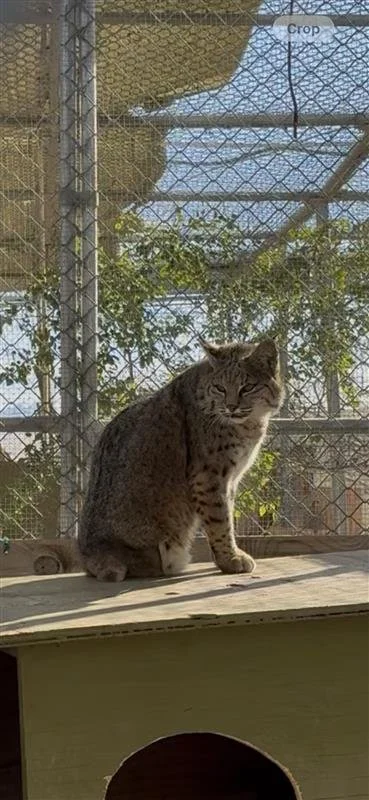
Yuma is a rescued bobcat living at Southwest Wildlife Conservation Center in Scottsdale, Arizona. Having lost one of his hind limbs earlier in life, Yuma relies entirely on his remaining three legs for mobility. Because he must hop rather than walk with a normal gait, there is significant strain on his pelvis and remaining hip.
As Yuma aged, his veterinary team observed increasing discomfort and reduced mobility. Diagnostic imaging revealed extensive damage to his pelvis and hip, and he had lost approximately 50% of the normal range of motion in his remaining hind limb. While there was no way to restore the damaged anatomy or fully correct his walk, his comfort and mobility became the primary treatment goal.
To help support Yuma's quality of life, the veterinary team developed a treatment plan focused on improving joint function and reducing discomfort.
DIAGNOSIS –
Hip Osteoarthritis
Chronic Pelvic Damage
Reduced Range of Motion
Abnormal Gait
TREATMENTS -
Following sedation, Yuma received an intra-articular injection of Spryng® with OsteoCushion® Technology into his hip joint.
To provide additional immediate lubrication, the treatment was administered alongside a small amount of hyaluronic acid. After the injection, the hip joint was gently cycled through its normal range of motion to help distribute the material evenly throughout the joint.
OUTCOME -
Several months after treatment, Yuma's veterinary and animal care teams reported noticeable improvements in his comfort and mobility.
Although his underlying orthopedic issues remain, Yuma appeared more comfortable during daily movement and demonstrated greater ease when walking throughout his enclosure. Caretakers also observed that he was able to rise more comfortably and move away when approached.
For Yuma, treatment was never about “going back to normal”. Instead, it was about helping him move with greater comfort and supporting the life he continues to enjoy at Southwest Wildlife Conservation Center.